Moving Warehouse or Closing Down? What Happens to Your Forklifts and Racking
A warehouse move and a warehouse closure create the same three problems — the racking, the forklifts, and reinstating the unit you're leaving — but the right answer to each is different depending on which one you're doing. This page covers both.
We see this from the phone-call side. Someone calls asking what their forklift is "worth," or whether their racking can be reused, when the real driver is a date: a new lease starting, an old lease ending, or both. The equipment question and the timeline question are the same question.
We're a Singapore forklift rental, service, sales and racking company — not a clearance house that's done this a hundred times. What we can put against the problem is what we actually run day to day: a fleet of close to 600 forklifts, our own workshop and technicians, and a racking team that surveys and plans live sites.
If you're relocating
Moving to a new site doesn't mean starting over on racking or forklifts — but it doesn't mean a straight lift-and-shift either.
Racking
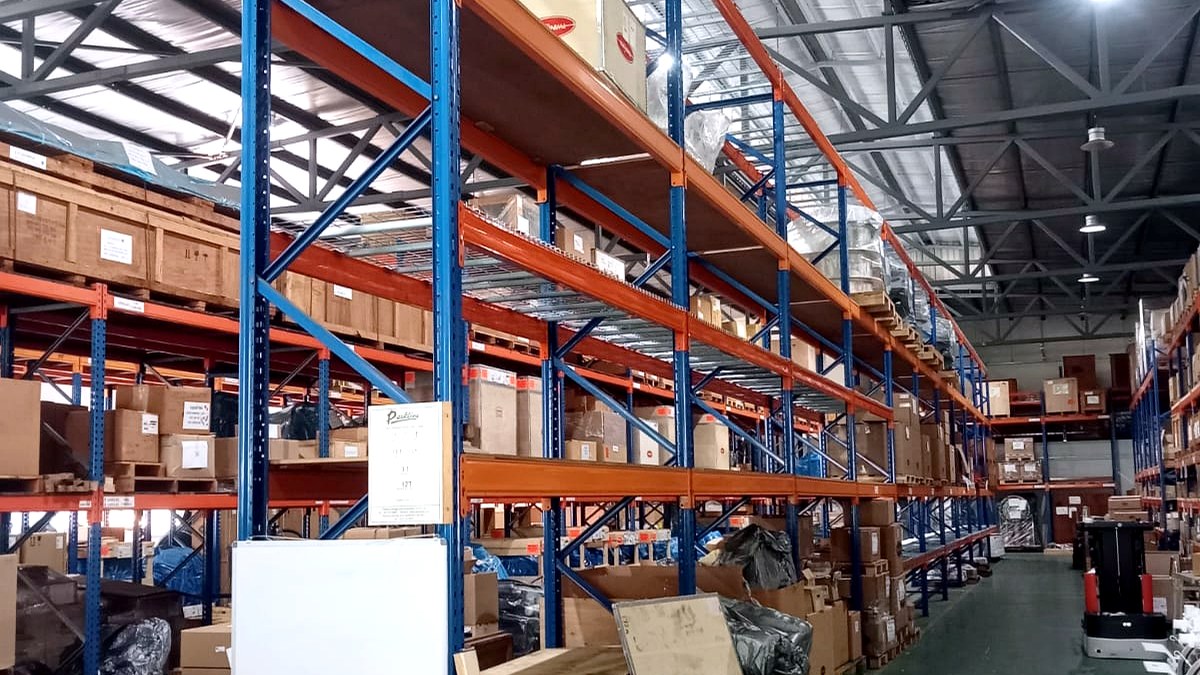
We can dismantle it at the old site, transport it, and re-install it at the new one. You keep your own racking — this isn't a sale, it's a move. But we'll say plainly what we find at survey: not every racking system should go back up as-is. Components can get damaged in dismantling. An older system may not suit the new building's clear height or floor loading. And frames and beams from different manufacturers generally don't mix — a system built up over years from more than one supplier often can't be reassembled as one clean layout. Where reuse doesn't make sense, we'll say so at survey rather than after the racking is already down.
Reinstatement
The unit you're leaving still needs to be handed back to the landlord in the state your lease requires, on top of everything happening at the new site.
Forklifts
A new site is often a different building — taller racking, a narrower aisle, a different floor finish. The forklift that suited the old warehouse may not suit the new one. Rather than assume the fleet just moves with you, we look at the new layout and tell you plainly what still fits and what should be traded in for the right spec. Because we run a rental fleet, a short-term rental truck can also cover the operational gap during the move itself, so the warehouse doesn't stop working while everything else is in transit.
If you're closing down
Closing is a different shape of the same problem — there's no new site, so every route has to account for that.
- Consignment / brokerage. We market and sell the machine on your behalf. You get the sale proceeds, less an agreed fee, once it sells — no cash out from us upfront, usually a better result than a rushed trade-in if there's a few weeks to work with.
- Trade-in. Relevant if you're downsizing rather than closing outright, and moving whatever remains of the fleet to a smaller footprint.
- Outright purchase. For machines we can put straight back on rent, or where we already have a buyer, we can buy the unit outright. This isn't our default — our cash is committed elsewhere, so we buy selectively, not everything through the door.
- Racking dismantle and removal, and reinstatement, on the same terms as above — we'll say clearly at survey what we can do ourselves and what needs a contractor brought in.
What happens next, step by step
If you're relocating:
- Survey — both sites. We look at the racking and layout at the site you're leaving, and the space, height and floor at the site you're going to. This tells us what can genuinely be reused and what can't.
- Plan. You get a plain plan covering: racking to move as-is, racking that needs replacing or supplementing, and which forklifts fit the new layout versus need re-specing.
- Dismantle, transport, re-install. Racking comes down at the old site, moves, and goes back up at the new one to the agreed plan.
- Forklift changeover. Trade-in on machines that don't fit the new site, replacement units supplied to spec, and rental cover if there's a gap while everything is in transit.
- Reinstatement at the old site.
If you're closing down:
- Survey. We check the machines, the racking, and what the lease actually requires for handover.
- Offer. For each forklift, we tell you which route fits — consignment, trade-in or outright purchase. No price is quoted at this stage; we don't put numbers in writing before we've seen the machine.
- Removal. Forklifts and racking cleared from site per the plan.
- Reinstatement, handled directly or arranged, scoped at survey.
We're not going to promise a fixed number of days for any of these steps here — it depends on how much racking, how many machines, and what the new or old site actually requires. A real schedule comes after we've seen the site, not before.
Whichever one you're doing, talk to us early
A relocation planned weeks ahead gets a cleaner racking survey and a proper forklift re-spec before the move date is fixed. A closure left to the last two weeks gets a rushed trade-in instead of a sale with time to find the right buyer. Either way, the earlier we're in the conversation, the more options are still open.
Related reading
- Warehouse relocation: decide your aisle width before you sign the new lease: why the forklift and the racking should be one decision, not two.
- Warehouse racking dismantle: what actually survives coming down, and what doesn't.
- Warehouse reinstatement: what your landlord actually wants before you hand back the keys.
- What is a used forklift actually worth: consignment, trade-in or outright sale explained.
We're at 7 Gul Circle, Singapore 629563 — that's where our yard, our trucks and our workshop team are based. Call or WhatsApp us and we'll get a survey on the calendar.
Moving, downsizing or closing?
Tell us the site and the date. We'll get a survey on the calendar.
WhatsApp +65 9349 1314 Get a Free Quote