
Warehouse Racking Dismantle in Singapore: What Actually Happens When It Comes Down
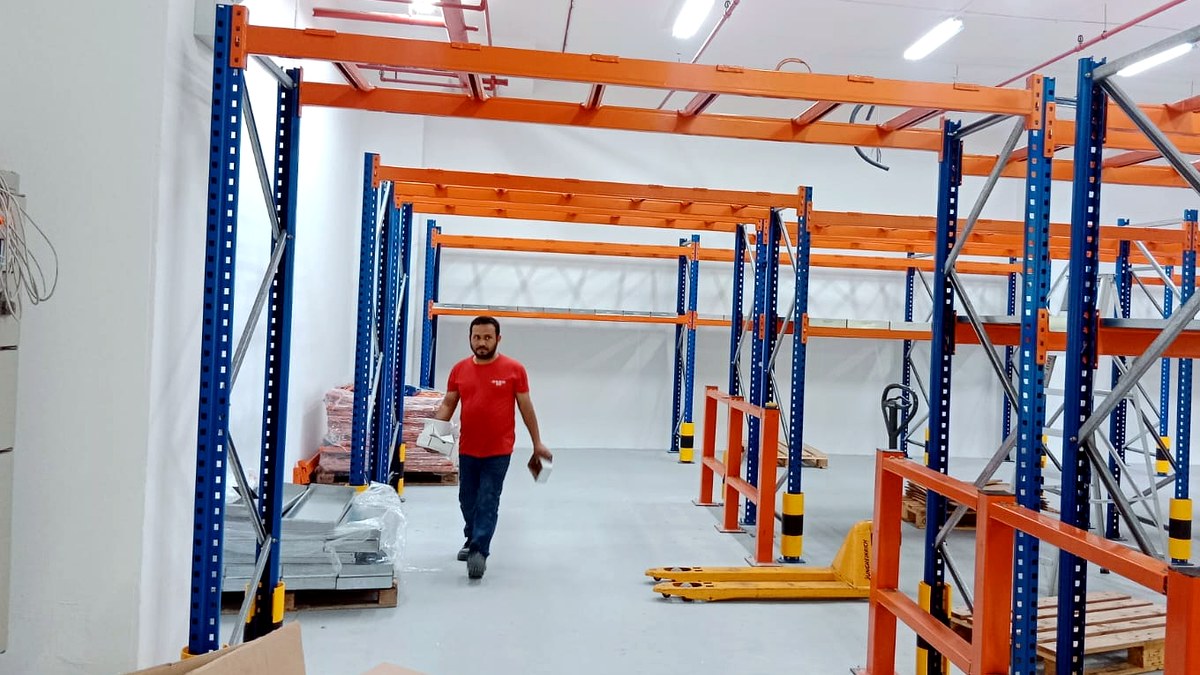
Racking looks permanent until you actually try to take it apart. Then you find out what years of forklift traffic, re-configuring and different suppliers have actually done to it.
What usually comes down clean
Beams are generally the more forgiving part. If they haven't been visibly bent or dropped, most beams survive a careful dismantle and can go back into service, either at a new site or elsewhere in the same layout.
What usually doesn't
Uprights and frames take the real punishment over the years — a forklift clipping a frame leg, a footplate that's been driven over, a base plate that's rusted where it sits on a wet floor. Connector pins go missing. Safety clips get lost or were never replaced after the last time someone was in a hurry. None of this is obvious from across the warehouse. It's obvious once someone's up close with a spanner.
Why frames and beams from different makers don't mix
Racking bought over several years, from more than one supplier, is common — you needed more bays, the original supplier had a long lead time, someone found a cheaper quote. The problem shows up at dismantle: bolt hole spacing, beam connector profiles and frame widths aren't standardised across manufacturers. A system built up piecemeal often can't be put back together as one clean layout, even though every individual piece is structurally fine on its own. That's not a defect in your racking — it's just how racking gets bought over time, and it's worth knowing before you plan the new layout around reusing all of it.
Why the survey decides it, not a phone call
Nobody can tell you over the phone what proportion of a racking system will survive dismantle and reassembly, because it depends on things a phone call can't see: corrosion at the base plates, whether the connectors are all one brand, what the new site's clear height and floor loading allow even if every component were perfect. A proper survey looks at the racking as it stands and the destination as it stands, and gives you a straight answer on what moves, what needs replacing, and what should just be scrapped rather than trucked across the island.
Two different jobs, same physical work
If you're relocating, dismantle is step one of a bigger sequence — the racking gets taken down, transported, and reinstalled to a plan that accounts for the new building. If you're closing, dismantle is closer to the end of the job — the racking comes down and out, full stop, and the unit gets handed back empty. The physical work of taking it apart is similar either way; what happens to it afterwards is not.
What we do, and what we don't claim
We survey the racking before anything comes down, tell you plainly what we expect to reuse and what we don't, and handle the dismantle and removal itself. We're a forklift and racking company first — we're not going to pretend we've done a hundred of these, and we're not going to promise a schedule before we've seen the site. What we bring is knowing racking from the design and installation side, not just as something to be hauled away.
What to do this week
If racking is coming down — for a move, a downsize, or a closure — get a survey booked before you commit to a layout or a removal date. It's a lot cheaper to find out what won't reassemble before the racking is on a truck than after.
Common Questions
What happens when warehouse racking is dismantled?
Beams and frames come down in reverse order of installation, are sorted by what is reusable, and the reusable stock is bought back or removed. What comes down clean and what does not is the whole difference in cost, and that is decided by a survey rather than by a phone call.
Can old racking be reused or sold after dismantling?
Some of it. Beams usually survive, frames often do, and anything bent, drilled or corroded at the base does not. Value depends on whether the make and model is still current enough for someone else to extend a system with it.
Why can't I mix racking frames and beams from different manufacturers?
Because the beam connector is specific to the maker's upright. Different makers use different lock profiles and hole pitches, so a beam from one system will not seat correctly in another maker's frame even when it looks close. Mixing them means the connection is not carrying load the way the design assumed.
Who dismantles warehouse racking in Singapore?
M&C Industrial Solution dismantles warehouse racking in Singapore and buys back reusable stock, surveying the site first because what is actually there decides the job.
Related reading
- Moving warehouse or closing down?: the full picture on forklifts, racking and reinstatement.
- Warehouse racking Singapore: survey, layout design, supply and installation.
Racking coming down? Get a survey first.
Tell us the site and the racking. We'll tell you plainly what survives.
WhatsApp +65 9349 1314 Get a Free Quote