
How to Increase Warehouse Storage Capacity in Singapore
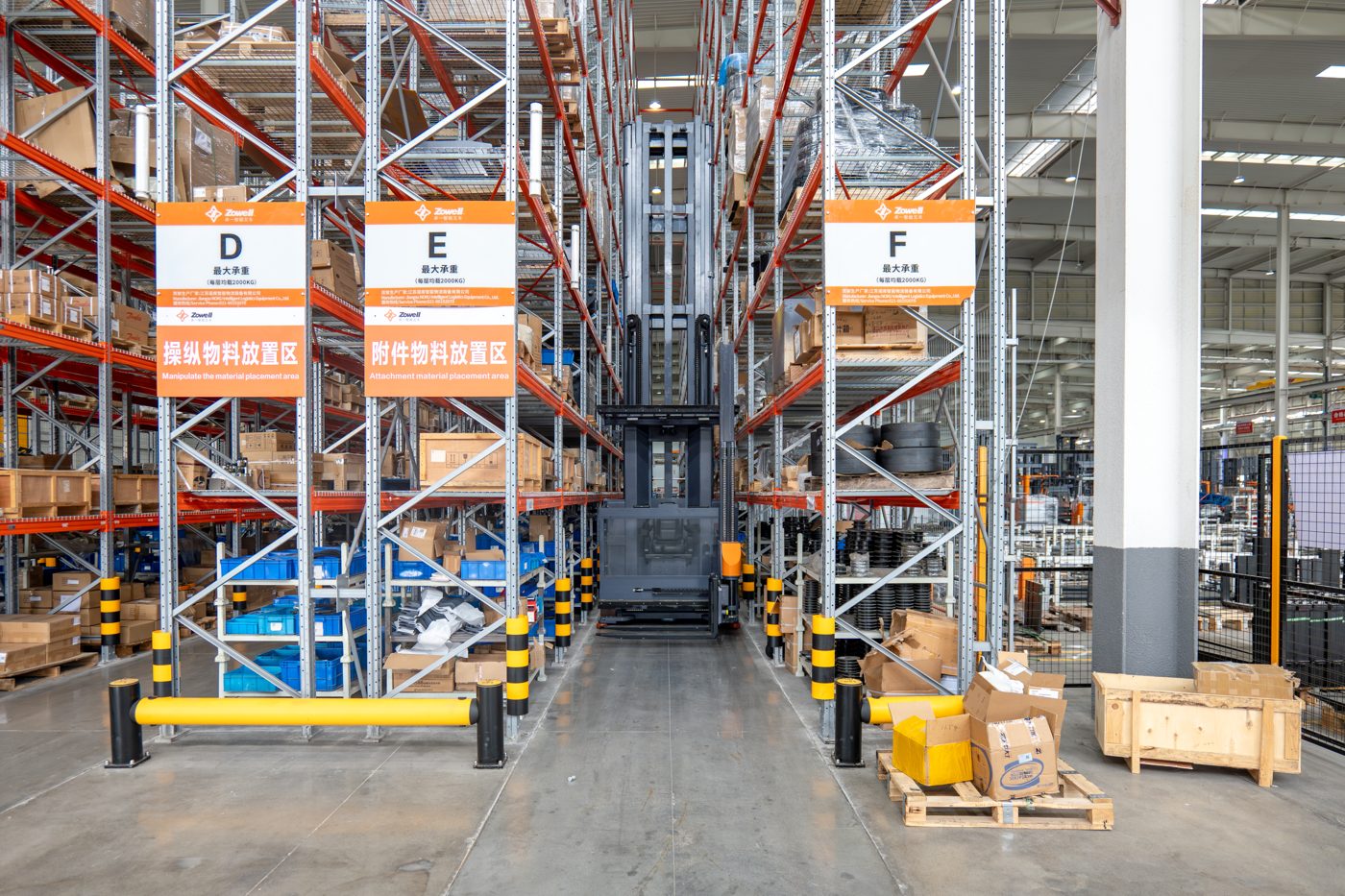
The fastest way to increase warehouse storage capacity is to narrow your aisles. A very narrow aisle (VNA) setup shrinks your aisles from about 3 metres to around 1.6 metres, and every metre you save becomes a new racking row. In practice this adds 30 to 40 percent more pallet positions to the same floor, without moving to a bigger unit.
Why warehouses run out of space (but not floor)
Most Singapore warehouses lose a huge amount of floor to aisles. A standard counterbalance forklift needs an aisle of 3.5 metres or more; a reach truck needs about 2.7 to 3.0 metres. Multiply that by every aisle and you are paying rent for a lot of empty driving lanes, not storage.
What is VNA, and how it maximises warehouse space
VNA stands for very narrow aisle. A VNA truck does not turn in the aisle at all; the forks rotate instead. So the aisle only needs to be a little wider than the truck, around 1.6 to 1.9 metres. Shrink every aisle by more than a metre and those saved metres convert straight into extra racking rows and more pallet positions, often reaching much higher too (up to 13.5 metres and beyond).
| Truck type | Aisle needed | Relative storage density |
|---|---|---|
| Counterbalance | 3.5 m or more | Low |
| Reach truck | 2.7 to 3.0 m | Medium |
| VNA | 1.6 to 1.9 m | Highest |
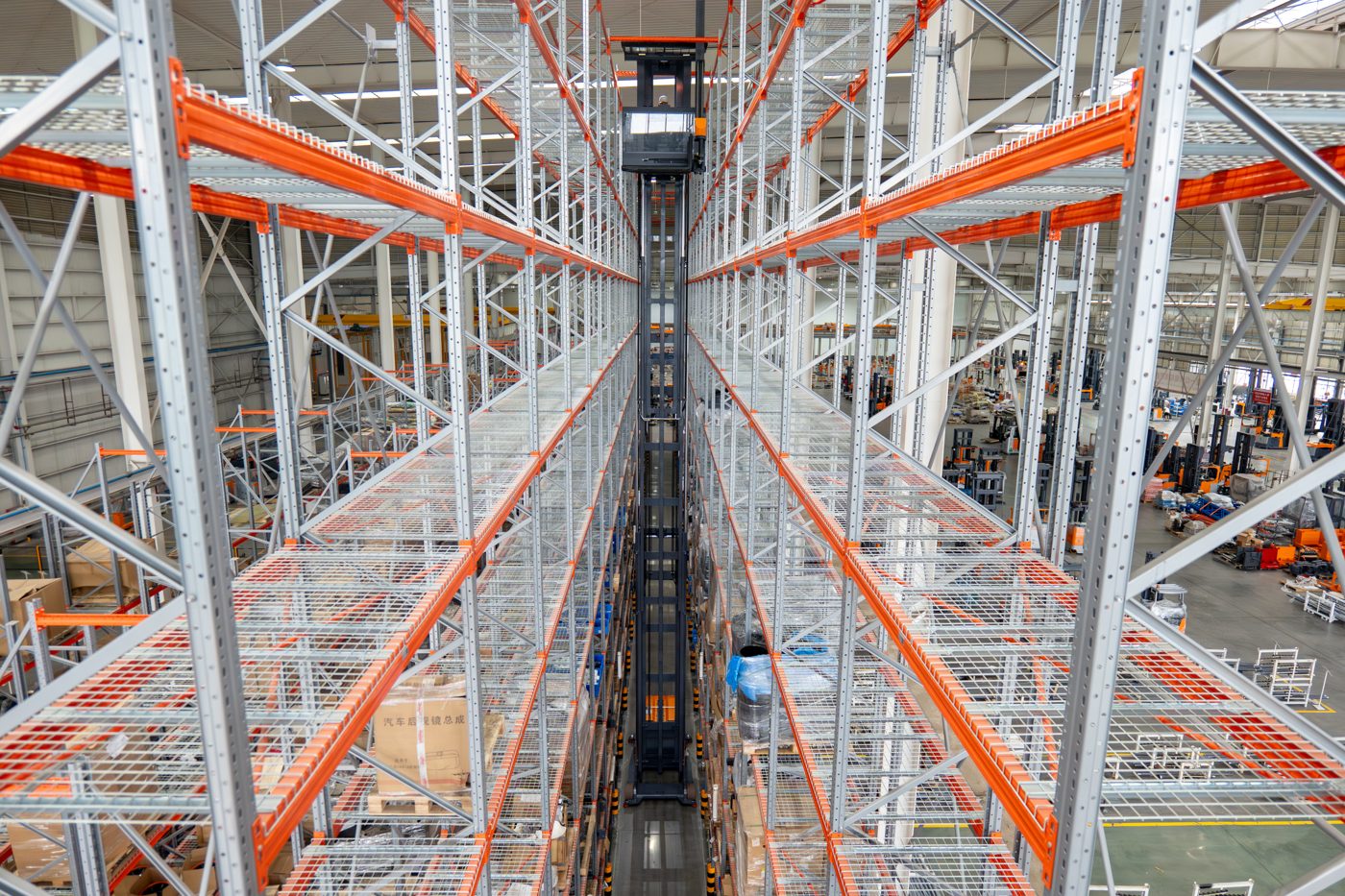
Work out your own gain (5-minute test)
- Measure your current aisle width. Most local warehouses run 2.8 to 3.5 m.
- Count your aisles.
- Multiply aisles by roughly 1.2 m of width saved with VNA.
- Divide by about 2.4 m (one racking row plus clearance).
That result is roughly how many new racking rows you could add. For a typical 20,000 sq ft warehouse with 8 aisles, that is often 3 to 4 extra rows, hundreds more pallet positions without moving.
The part most dealers miss: racking AND the truck together
VNA only works when the racking and the VNA forklift are designed as one system. Aisle width, rack height and the truck's reach all depend on each other. Because M&C supplies both, one team is responsible for the whole setup, with no gap between a racking supplier who does not know your trucks and a truck supplier who does not know your racks.
Rent or buy first
Not ready to commit? You can rent a VNA truck and test it in your real workflow before you buy, and phase the racking. See the Zowell VNA range we carry, or compare a VNA against a reach truck in our guide, VNA vs reach truck.
Why M&C for VNA in Singapore
- The exclusive Zowell VNA agent in Singapore. No middlemen, no waiting on overseas support.
- One team for the truck, the racking and the servicing. bizSAFE 3 certified.
- Free site survey. We measure your space and tell you the real pallet gain.
Frequently asked questions
How can I increase warehouse storage capacity without moving?
Narrow your aisles with a VNA setup. The space you save becomes extra racking rows, often 30 to 40 percent more pallet positions on the same floor.
How narrow can a VNA aisle be?
About 1.6 to 1.9 metres, versus 2.7 to 3.0 metres for a reach truck.
Do I need special racking for VNA?
Usually yes, guided by wire or rail. M&C supplies both the racking and the truck as one system.
Related reading
- Warehouse racking Singapore: survey, design, supply and install.
- VNA forklifts Singapore: the trucks that work the narrow aisles.
- VNA or reach truck: which one fits your aisle.
Why this matters more in 2026 than it did two years ago
This page used to argue that renting more space is expensive. In 2026 the argument is stronger than that, because for a while there is no more space to rent.
| What the market is doing | Where it stands |
|---|---|
| Industrial rents | The highest level since 1996, after five straight years of gains |
| Prime logistics rents, 2026 forecast | Up 2 to 3 percent on the year, against 0.9 percent in 2025 |
| New prime logistics space completing in 2026 | None. No new multi-user prime logistics development completes this year |
| When new space becomes available to lease | Not until 2027 |
| Prime logistics occupancy | 93.6 percent, up from 92.1 percent a year earlier |
The full market picture, with the JTC index and what the new tall units actually offer, is in warehouse space in Singapore 2026.
Sources: EdgeProp and JLL, read August 2026.
Put plainly: the option of simply taking more space has quietly closed for this year. A business that outgrows its warehouse in 2026 is choosing between paying the highest rent in three decades for whatever is left, or getting more out of the four walls it already has.
What to measure before anyone quotes you
Four numbers settle most of it, and you can take them yourself in half an hour:
- Clear aisle width, measured between the pallets that overhang the racking rather than between the uprights. Those are different numbers and the difference is what decides which truck fits.
- Height to the lowest obstruction — sprinklers, lighting, ducting — not the height of the roof.
- Heaviest pallet, and whether it goes to the top level.
- Floor condition, and whether the slab has been patched. The higher you lift, the more a small dip becomes a large sway.
Send those four and the answer comes back without anyone visiting.
Free VNA site survey. Real pallet numbers.
Send us your warehouse size or floor plan. We reply same day with how much more you can store.
WhatsApp +65 9349 1314 See VNA Forklifts