
Forklift Not Working? What to Check Before You Call Anyone
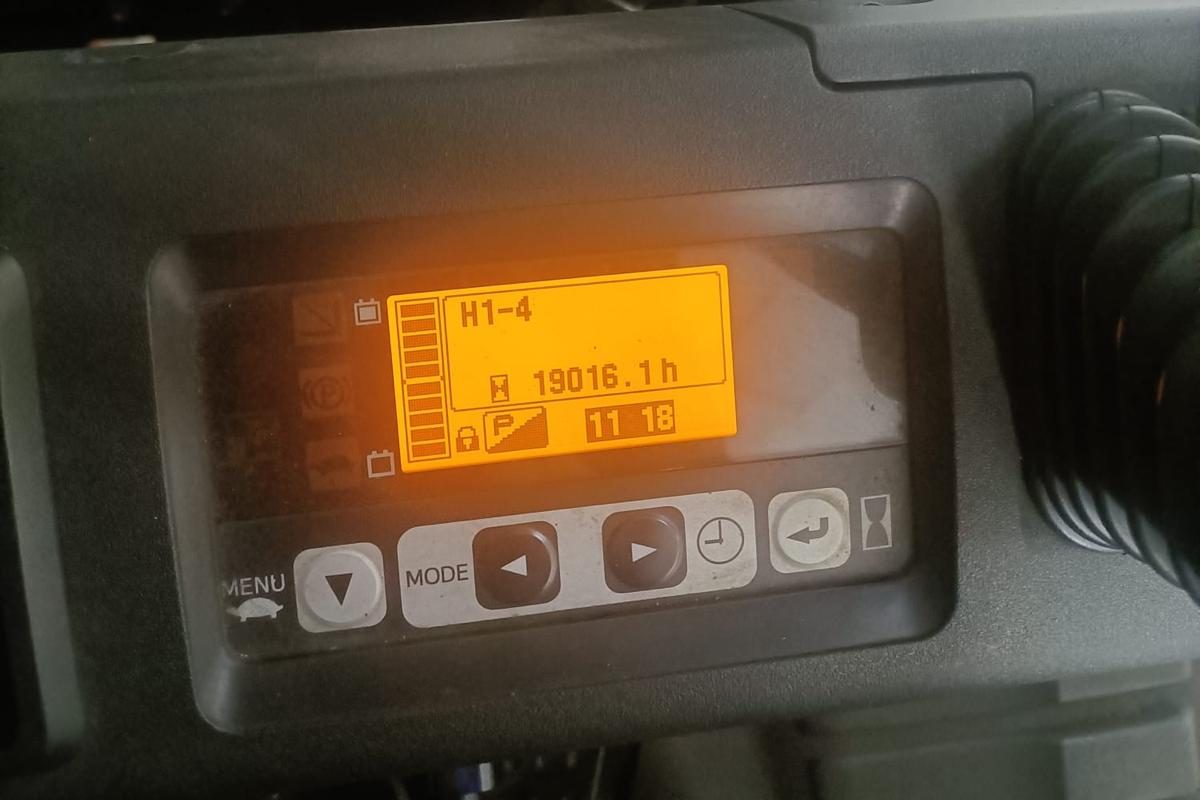
H1-4 on the screen, and 19,016 hours on the meter. Photograph both. The code narrows the fault and the hours tell a technician what to expect of a truck that age.
Before you call anyone, spend two minutes on this list. A fair share of the breakdowns we are called to are not breakdowns. They are a battery connector, a seat switch, a parking brake or a lever left in the wrong place — and the truck is working again before a technician could have reached the car park.
Start here: is it dead, or is it refusing?
Two completely different problems, and telling them apart takes ten seconds.
| What you see | What it usually means |
|---|---|
| Nothing at all. No dash, no lights, no beep | Power. Battery, connector, isolator, fuse |
| Dash lights up, truck will not move | An interlock. The truck has decided it is not safe to move |
| Moves but will not lift | Hydraulics. Oil level, a lever, or a load beyond capacity |
| Works, but badly | The real fault, and the one worth calling about |
If there is no power at all
- Is the isolator or emergency stop pulled out? The red button. It gets knocked, and it gets pressed at the end of a shift and forgotten.
- Is the key switch actually on? Obvious, and it is still the answer sometimes.
- Is the battery connector fully seated? On an electric truck, look at the big plug. A connector that is nearly in gives nothing at all, and the plug can be sooted or heat-marked. If it is hot, blackened or melted, stop and call us — that is a real fault and it gets worse.
- Is the battery charged? Not "was it on charge" — was the charger actually running, and did it finish?
- On a diesel truck, is there fuel? More often than anyone admits.
If it powers up but will not drive
Modern trucks refuse to move on purpose, and almost always for one of these:
- The operator is not properly in the seat. The seat switch has to see weight. Sitting on the edge, or a damaged seat, and the truck will not move.
- The parking brake is still on.
- The direction lever is not in neutral at start-up. Many trucks will not engage until it has been cycled through neutral.
- The seat belt, on trucks configured to require it.
- The battery is too flat to drive but not too flat to light the dash. Very common, and it looks like a fault.
If it drives but will not lift
- Check the hydraulic oil level with the mast fully down. Checking it raised gives a false reading.
- Is the load simply too heavy for that height? Capacity falls as the mast rises, and it falls further with an attachment fitted. The truck may be doing exactly what it should. Our page on forklift attachments explains why.
- Look underneath for a puddle. Red is hydraulic, dark is engine oil. A leak is a call, not a fix.
- Lifts slowly or in steps? Usually oil level or a tired pump. Worth a call before it strands you.
If there is a code on the screen
Photograph it. Then, if the truck is safe, switch off, wait thirty seconds and restart — a genuine one-off fault often clears and does not return. If the same code comes back, it is telling you something.
Two things worth knowing, because they cause more confusion than the faults themselves:
- The number on the screen is often not the code in the manual. Some brands display a short form and store the full code behind it. Reading the display alone can send you to the wrong part.
- The same short code can mean different things on different trucks. Brand and model matter as much as the number.
Send us the photo with the brand and model and we will tell you what it actually is. We keep an indexed fault library covering thousands of codes, and it is quicker than guessing.
Stop and call, do not investigate
Some things are not a checklist item. If you see any of these, take the truck out of service:
- Any smell of burning, or smoke
- A hot, blackened or melted battery connector
- Hydraulic fluid spraying rather than dripping — do not put a hand near it
- The mast drifting down under load
- Steering that has gone light or vague
- Cracks in a fork, or a fork that has bent
- Any lean, sway or noise that is new at height
And the rule from the checklist we give customers: if any check fails, take the truck out of service until it is repaired. Not after this pallet. Under the Workplace Safety and Health Act, machinery must be kept safe and properly maintained, and records kept.
What to send us so the van arrives with the right part
The difference between one visit and two is almost always the information in the first message.
- Brand and model, or a photo of the data plate on the truck
- What it does and does not do — "powers up, will not lift" beats "spoil"
- A photo of any code on the screen
- Whether it is completely stopped or still limping
- Where it is, and whether a van can get to it
- The hour meter reading, if you can see it
Photographs beat descriptions every time. A picture of the plate, the screen and the puddle tells a technician more than a paragraph will.
The pattern worth noticing
If you are reading this page more than once or twice a year for the same truck, the problem is not the fault you are chasing. Repeated breakdowns on one machine are almost always a maintenance gap, and the parts that fail are the same parts a planned service would have replaced before they went. We set the comparison out honestly, including what it costs, in what forklift servicing costs in Singapore.
Common Questions
My forklift will not start. What should I check first?
In order: the emergency stop or isolator, the key switch, the battery connector fully seated, whether the battery actually finished charging, and on a diesel truck whether there is fuel. If the dash lights up but the truck will not move, that is a different problem - it is usually an interlock rather than a power fault, so check the seat switch, the parking brake and the direction lever.
The forklift powers up but will not move. Why?
Modern trucks refuse to move on purpose. The most common reasons are the operator not properly in the seat so the seat switch does not see weight, the parking brake still on, the direction lever not cycled through neutral at start-up, the seat belt on trucks configured to require it, or a battery flat enough to stop the truck driving but not flat enough to stop the dash lighting.
The forklift drives but will not lift. What is wrong?
Check the hydraulic oil level with the mast fully lowered, because checking it raised gives a false reading. Then consider whether the load is simply beyond capacity at that height - capacity falls as the mast rises, and falls further with an attachment fitted. Look underneath for a puddle: red is hydraulic, dark is engine oil. A leak is a call rather than a fix.
There is an error code on the screen. What do I do?
Photograph it. If the truck is safe, switch off, wait thirty seconds and restart, because a genuine one-off often clears. If the same code returns, send us the photo with the brand and model. Two things cause confusion: the number displayed is often a short form rather than the full code in the manual, and the same short code can mean different things on different trucks.
When should I stop using the forklift immediately?
Any smell of burning or smoke, a hot or blackened or melted battery connector, hydraulic fluid spraying rather than dripping, the mast drifting down under load, steering that has gone light or vague, cracks in a fork or a bent fork, and any new lean, sway or noise at height. Take the truck out of service until it is repaired, not after the next pallet.
What information helps the technician arrive with the right part?
Brand and model or a photo of the data plate, what the truck does and does not do, a photo of any code on the screen, whether it is fully stopped or still limping, where it is and whether a van can reach it, and the hour meter reading. Photographs beat descriptions - a picture of the plate, the screen and the puddle tells a technician more than a paragraph.
Send us the four numbers
Aisle width, height to the lowest obstruction, heaviest pallet, and whether the floor has been patched. We will tell you what fits before anyone visits.
WhatsApp us